
Each year on June 24, the town of Balayan comes alive with vibrant colors, music, and joy as it commemorates one of the most famous and culturally significant fiestas in Batangas, the Parada ng Lechon. Celebrating its 66th year, this remarkable event still enchants both residents and visitors as it pays tribute to the town’s patron saint, St. John the Baptist, through a unique blend of faith, food, and festivity.

Origin of Parada ng Lechon
The Parada ng Lechon is more than just a parade; it serves as a longstanding display of gratitude and religious devotion. Historically, the observance started as a simple custom practiced by working-class families in the Kanluran District (Western portion) of Balayan. In both Spanish and American periods, it was customary for the affluent families of the town to parade roasted pigs or lechon through the street on June 24 to commemorate the feast of their patron, St. John the Baptist.
And while the more privileged families could afford to display such offering, the less fortunate residents often participated as spectators. For them, joining the celebration as observers was a way of expressing their own gratitude and reverence to the patron saint, in hope that their prayer and thanksgiving would also be heard.
Through the years, more families from the district have experienced better fortunes which led to an increase in the number of lechon paraded annually. What started as simple tradition evolved into a full-blown town celebration. The simple parade became a symbol of gratitude and shared heritage.
In 1959, the elders of the district formalized the celebration by forming the Hermandad San Juan Bautitsa (Brotherhood of St. John the Baptist). With their leadership, the event was transformed from a one-day celebration to a 2 week-long fiesta, a tradition that continues up to this day.
Source: Balayan Batangas website: https://balayan.gov.ph/parada-ng-lechon/
66th Parada ng Lechon

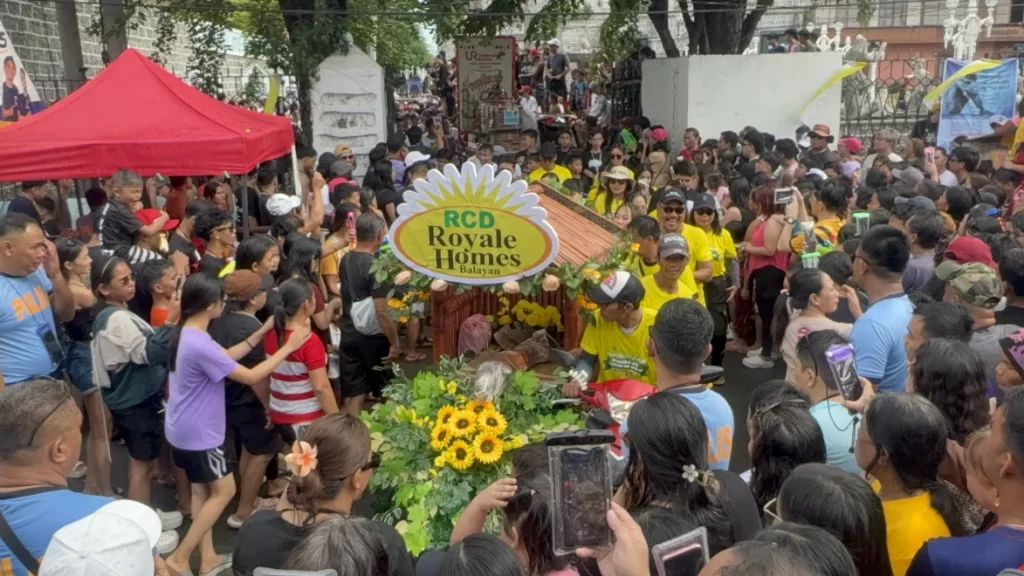


This year, a solemn Mass honoring St. John the Baptist kicked off the 66th Parada ng Lechon early in the morning. Following the Mass is the much-anticipated parade of roasted pigs, and the streets of Balayan were alive with chants, laughter, music, and activity. Each of the 71 participants in this year’s parade represented one of the three clusters.
In addition to being cooked, the lechon was also dressed out in creative and colorful outfits. While some pigs were hilariously dressed as cartoon characters, others wore traditional Filipino clothing and organizational attire. It was a delightful blend of art, tradition, and humor. The floats that carried the lechon were also beautifully decorated. The parade was accompanied by lively marching bands that played upbeat music, setting the rhythm for the parade. The air was thick with excitement, the sounds of drums, brass, and laughter.
Thousands if not hundreds of residents from different barangay of the town, tourists from all over Batangas, and even foreign tourists who had heard of the celebration was present. The crowd came prepared, many holding tabo, timba, water hose, and water guns, ready for the traditional basaan, or water dousing. In the spirit of St. John the Baptist, who baptized many, everyone participated in soaking one another with water. Children squealed with delight, young people danced as they got splashed, and even the elders smiled as water rained down.
Even the local law enforcement officials couldn’t resist joining in on the fun while maintaining safety and order throughout the event. Before the parade even ended, live band performances and solo musical acts had already begun in various corners of the town. Temporary stages set up across streets turned into spots for open-air concerts, with free alcoholic drinks served not only to performers but also to the cheering crowd. It was, without a doubt, a street party like no other; organic, inclusive, and bursting with energy. It was unquestionably a street party unlike any other—natural, inclusive, and brimming with vitality.
Additionally, as is customary in Balayan, the festivities continue beyond the streets. It goes on in every household. But beyond the music, dancing, food, and fun lies the deeper soul of the Parada ng Lechon — a celebration of devotion, faith, and the enduring culture of the Batangueños. Every costume, every splash of water, every song and dish served is a reflection of a people who know how to celebrate life while never forgetting to give thanks.
As the sun set on June 24, 2025, the people of Balayan looked back on yet another successful celebration — grateful for their heritage, proud of their culture, and hopeful for the future. And as they begin to prepare for next year’s festivities, one thing is certain: the Parada ng Lechon will continue to thrive, bringing joy, unity, and faith to generations to come.